
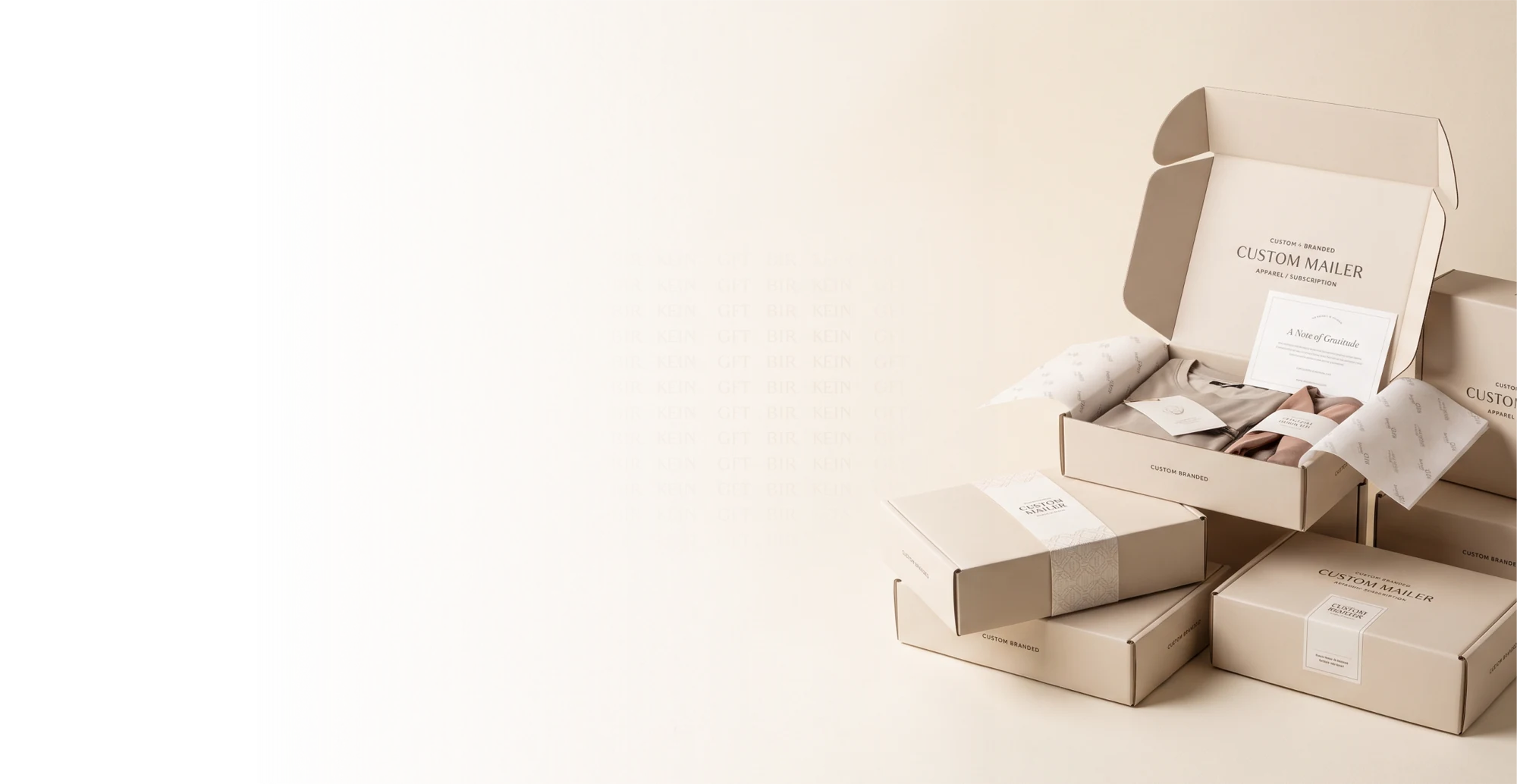
Custom Mailer Boxes — Printed & Built to Order
One-piece boxes that fold flat, close without tape, and carry your branding on every panel. Built for products across apparel, cosmetics, subscription, and e-commerce.
What Makes a Box a Mailer Box?
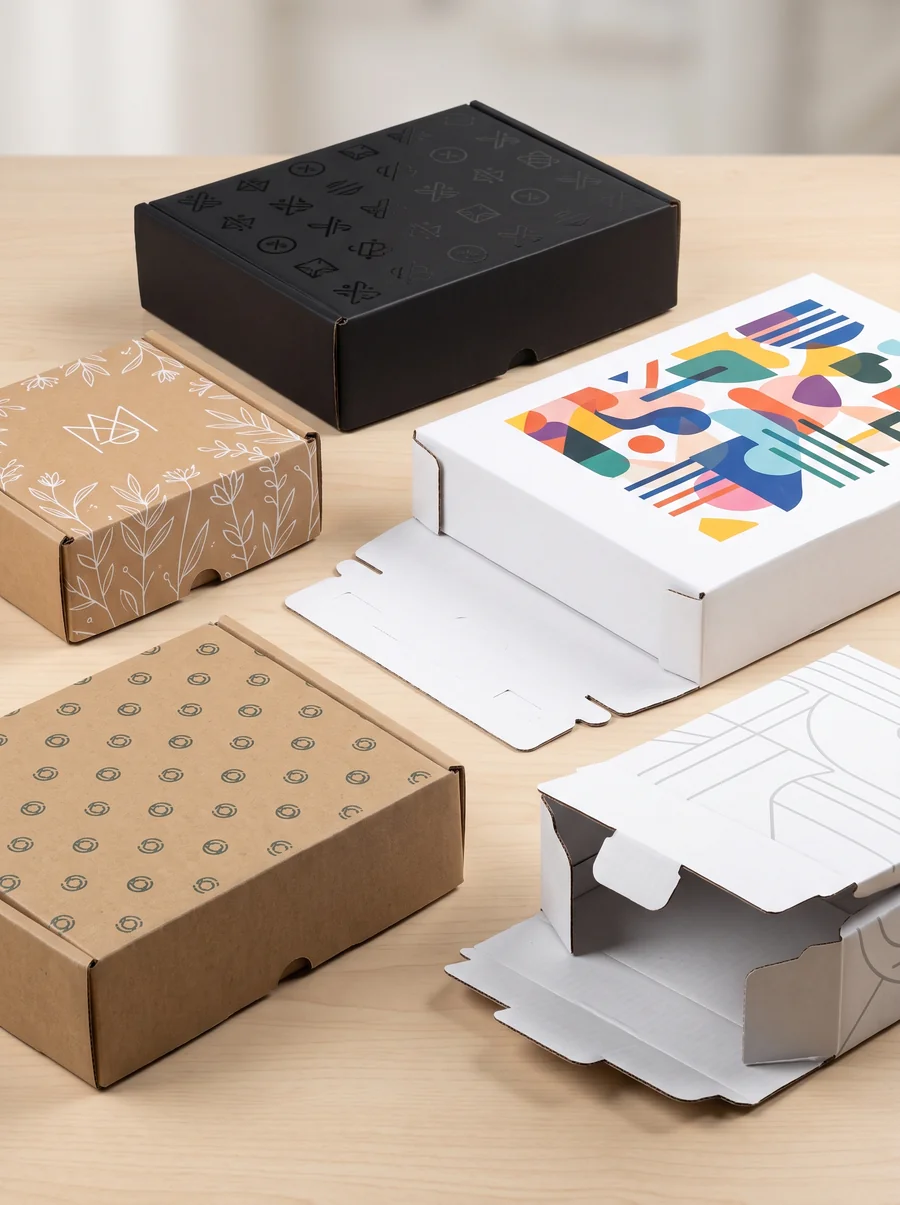
Custom mailer boxes are one-piece corrugated boxes, typically finished in kraft or white, that fold from a single flat sheet and close via an interlocking flap mechanism, without any tape. Unlike a standard shipping carton that requires tape to seal, a mailer ships flat, folds together in one motion, and is printed inside and out to double as a branded unboxing surface.
The word "mailer" describes a construction method, not a size or an industry. The same one-piece, tape-free logic that makes a mailer efficient for a t-shirt works identically for a skincare set or a monthly subscription box, which is why this format is used across nearly every product category, from retail and gifting to e-commerce and subscription services.
Shahwaze Packaging manufactures custom printed mailer boxes for brands across apparel, cosmetics, subscription, gifting, and e-commerce. Every mailer is built precisely to your product's dimensions, never pulled from a stock size chart.
Mailer Box Closures Explained
Closure names like ear lock, tab lock, tongue lock, and roll-end tuck-front describe the mechanism, but the choice matters in practice: the wrong closure for your product means slow packing or a box that doesn't stay shut in transit.
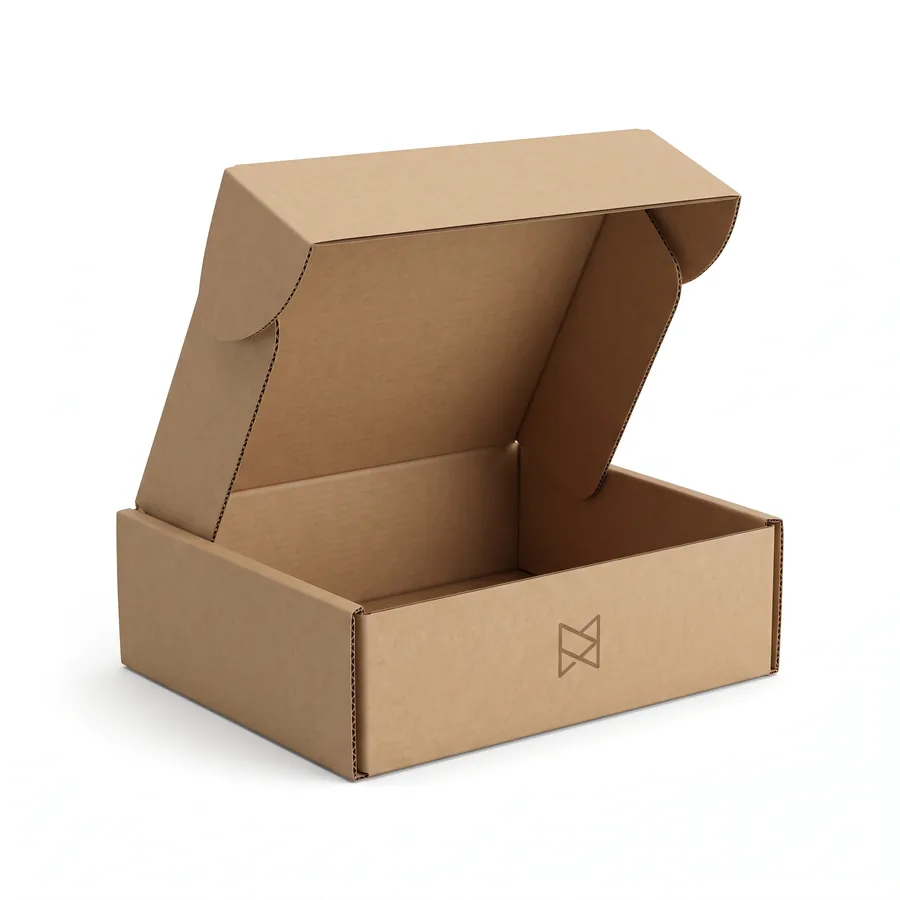
Roll-end tuck-front (RETF)
Flaps roll and interlock at the front, no tape, no glue. General-purpose mailers; the most common e-commerce format.
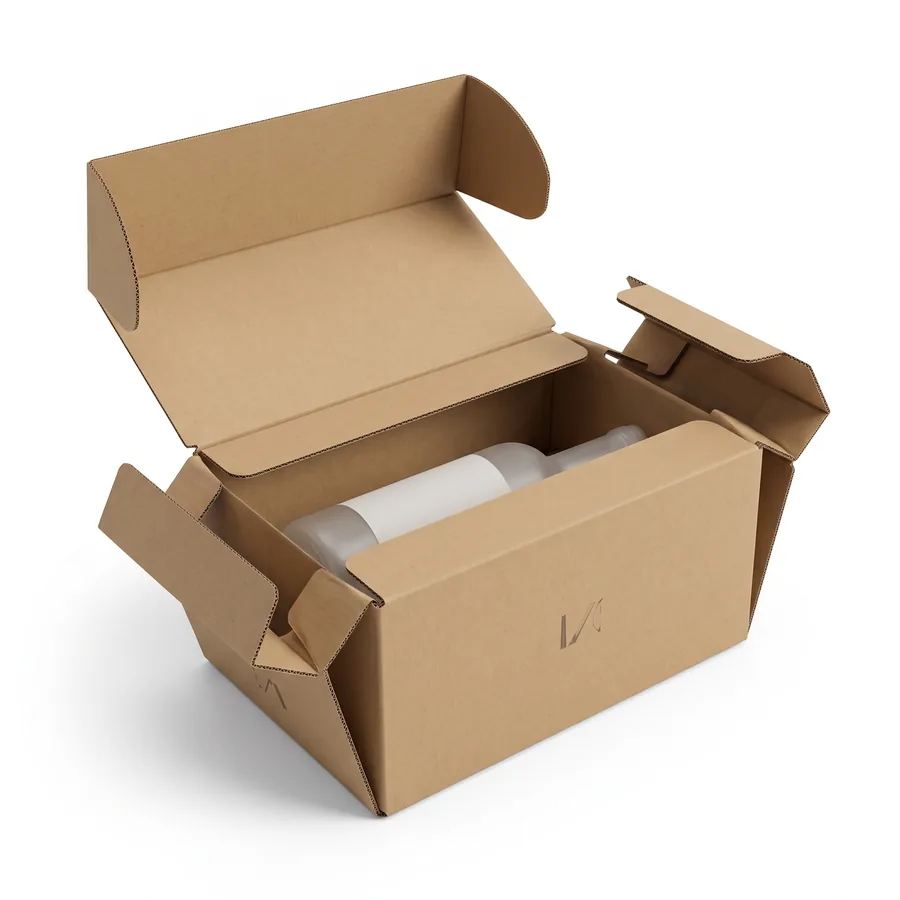
Roll-end tuck-top
Same interlock mechanism, opens from the top instead of the front. Best for taller products packed upright.
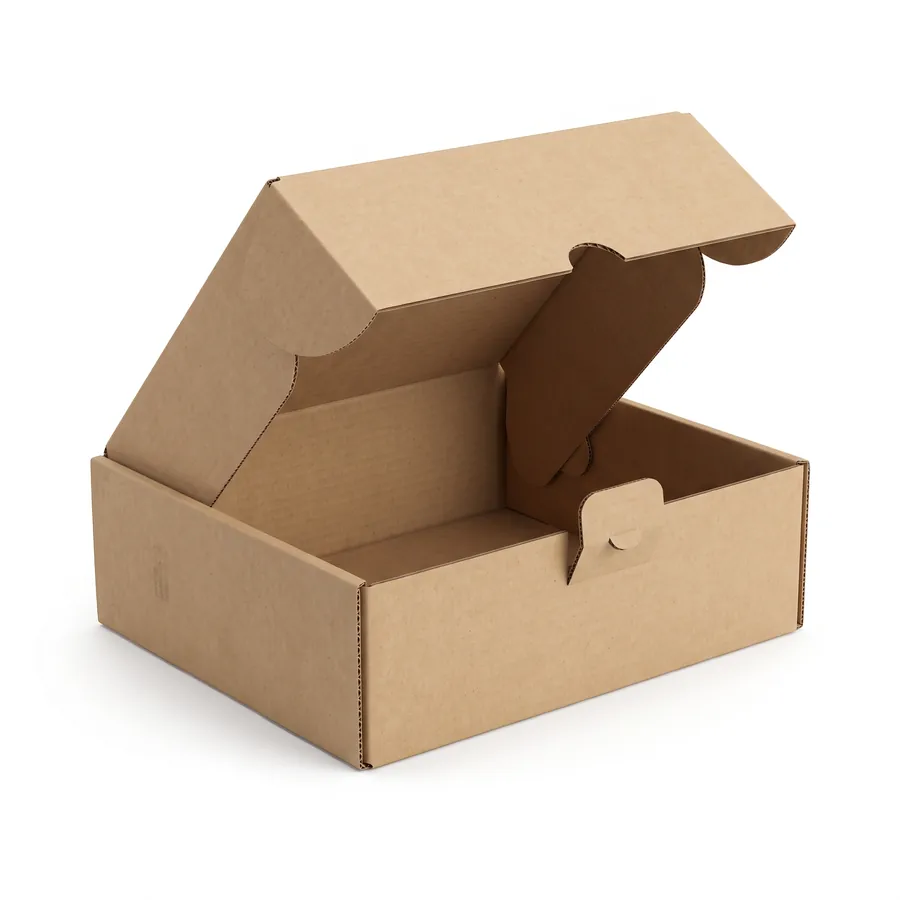
Ear lock
Corner tabs ("ears") fold and tuck into slots at each end. Extra transit security; resists flap pop-open under pressure.
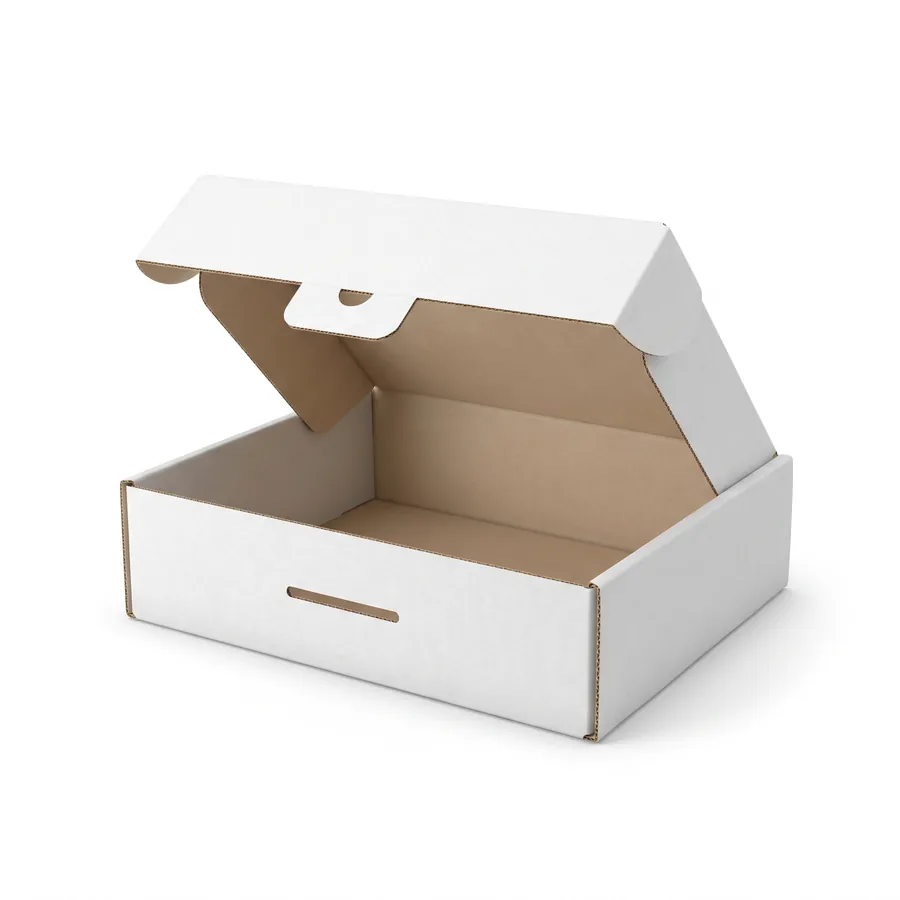
Tab lock
A single tab slots into a matching die-cut slit. Fast assembly; suited to lighter-duty products.
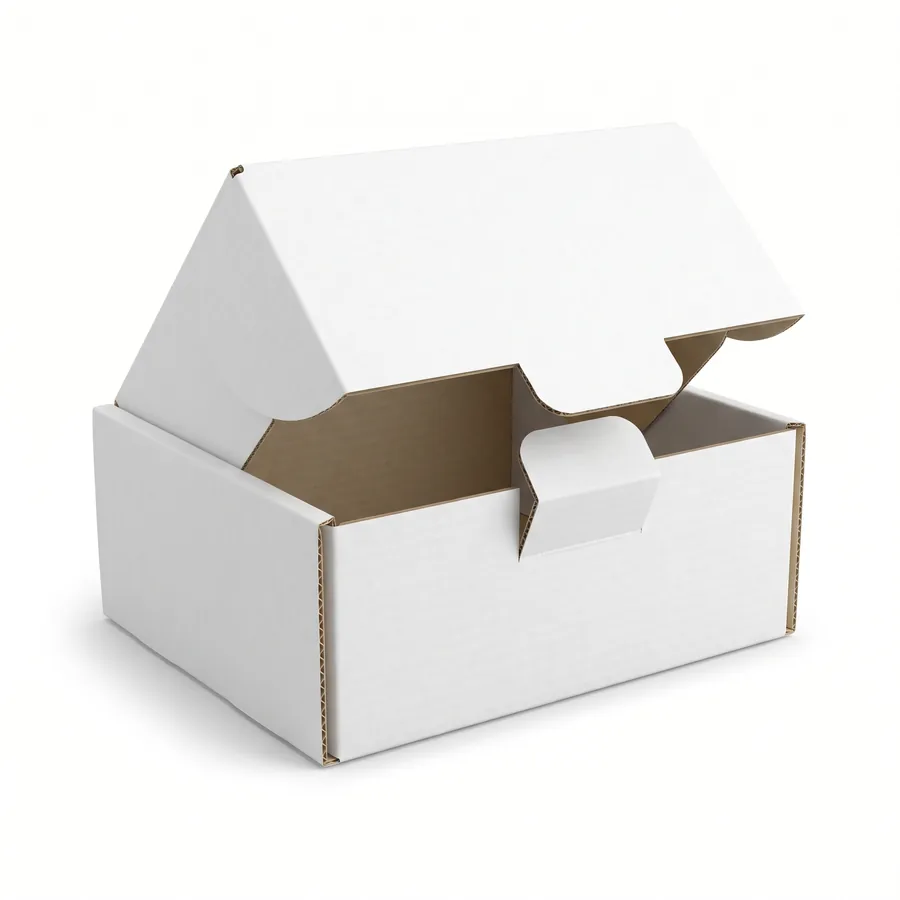
Tongue lock
An extended tongue tucks under the opposite flap. Mid-weight products needing a firmer close than tab lock.
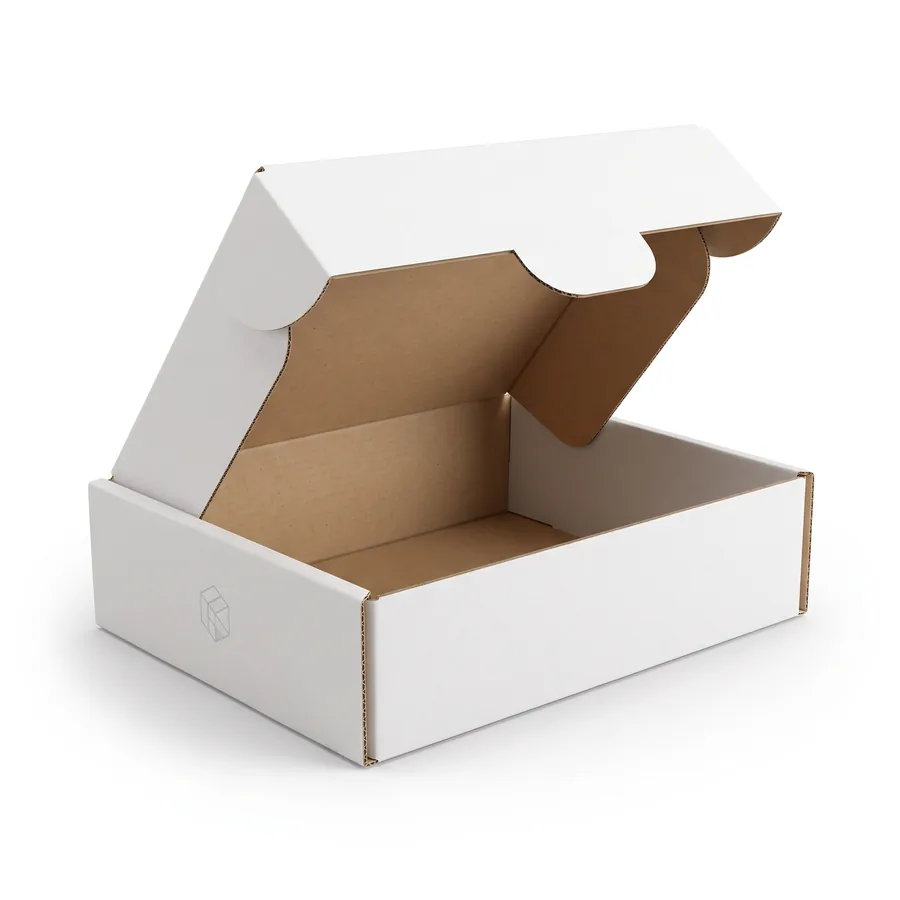
Cherry lock
A rounded tab locks into a circular die-cut hole. A decorative closure, often used where the lock is visible as a design element.
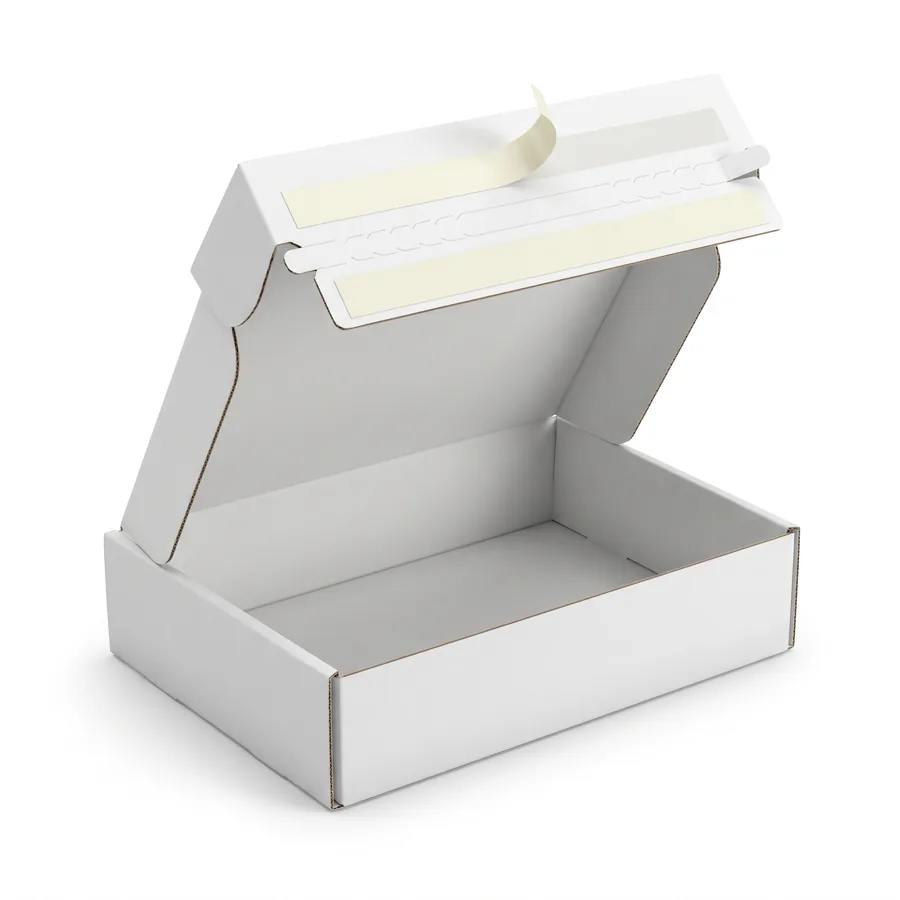
Self-sealing (adhesive strip)
A peel-and-seal adhesive strip along the flap. Fast warehouse packing; frequently paired with a second strip for returns.
As a rough guide: RETF covers most general shipping needs, ear lock adds security for anything that gets rough transit handling, and a self-sealing strip is worth the small added cost anywhere packing speed matters more than a few cents per unit. Tell us your product weight and how it moves through your fulfilment process, and we'll recommend the closure rather than leave you guessing from a spec sheet.
Sizing a Mailer to Your Product
This is a different question from shipping cost. Our E-commerce Packaging page covers how box size affects dimensional weight billing, this section is about physical fit, which matters even for products that never touch a carrier.
The clearance trade-off
Too tight, and the product resists insertion, packers force it in, corners crush, and packing takes longer per unit. Too loose, and the product shifts in transit, which shows as a dented panel, a crooked print alignment in a die-cut window, or a rattle a customer notices before they even open the box. As a starting point, we build in a small clearance, enough for the product to slide in without force, not enough for it to move once inside. Soft goods like folded apparel tolerate more clearance than rigid items like boxed cosmetics, which want a closer fit or a fitted insert.
What we need from you
Product dimensions at its packed state. Folded, boxed, or bagged, whatever state it's actually in when it goes into the mailer, not the product's raw dimensions.
Whether it's rigid or compressible. A rigid product needs a true-to-size fit; a compressible one has some give.
Any inserts or extras. Tissue, cards, or a second item add real volume, tell us up front so the dieline accounts for it.
Who Uses Mailer Boxes
Because a mailer is a construction method rather than an industry-specific product, the same format serves very different buyers, not just e-commerce shipping:
E-commerce and DTC
The most common use, branded shipping direct to a customer's door. See our E-commerce Packaging page for sizing against shipping cost.
Apparel and fashion
Fit-to-garment mailers for folded tees, hoodies, and accessories, see our Apparel Packaging page for garment-specific sizing.
Cosmetics and skincare
Rigid-fit mailers for boxed sets and multi-item skincare bundles, often with a die-cut window.
Subscription boxes
Repeat-order subscription mailer boxes built for a consistent monthly unboxing, with interior print that changes less often than the exterior.
Gifting and corporate
Branded mailers for corporate gifting and PR kits where a rigid gift box would be excessive but a plain shipping carton undersells the contents.
Mailer Box Variants We Manufacture
Each product below is a distinct mailer configuration, available in mailer boxes wholesale quantities:
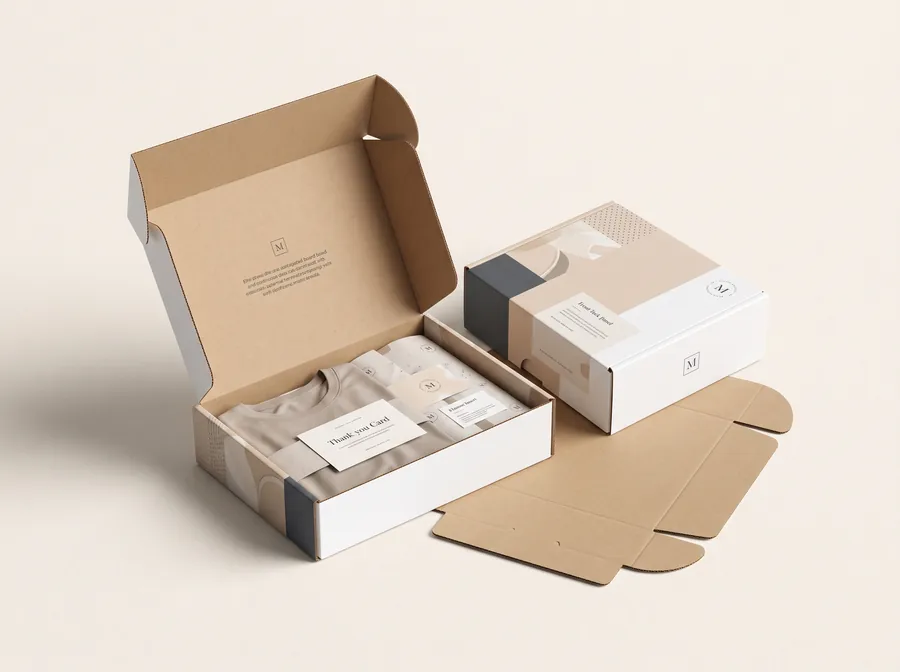 01
01RETF mailer boxes
The standard interlocking one-piece mailer, no tape, ships flat.
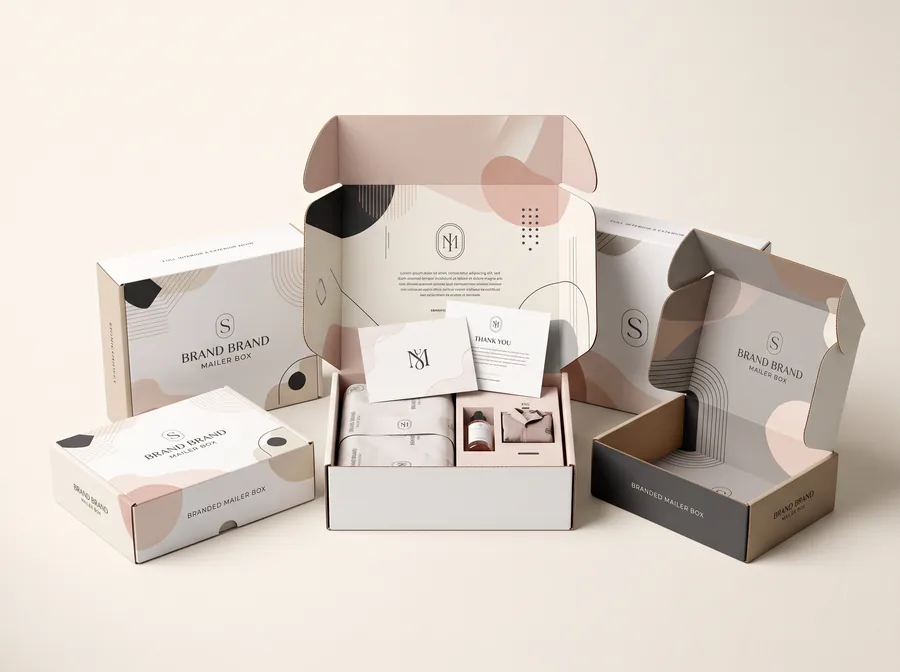 02
02Branded mailer boxes
Full interior and exterior print treatment for brands prioritising the unboxing moment.
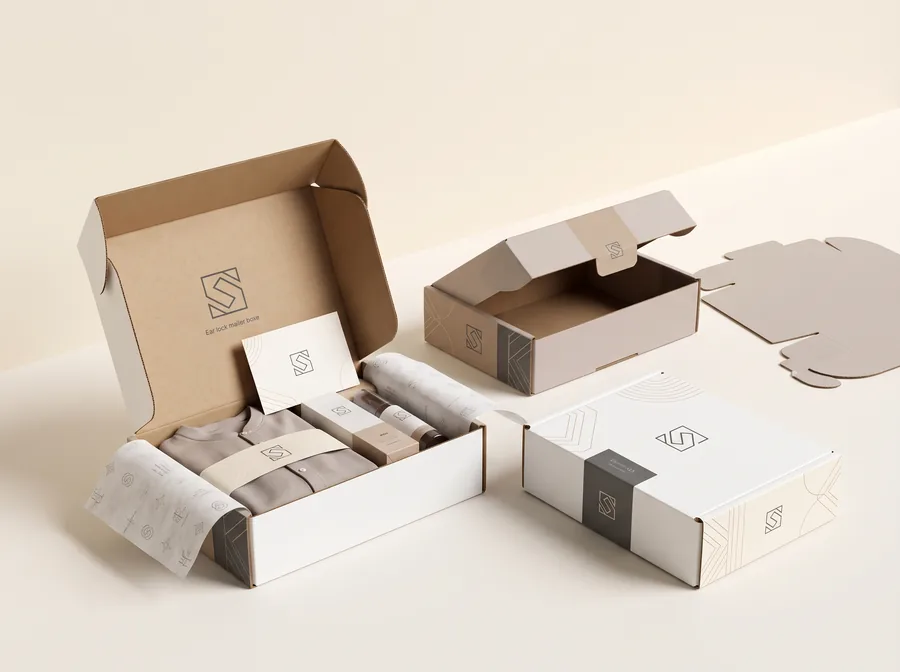 03
03Ear lock mailer boxes
Corner-tab locking for extra transit security.
 04
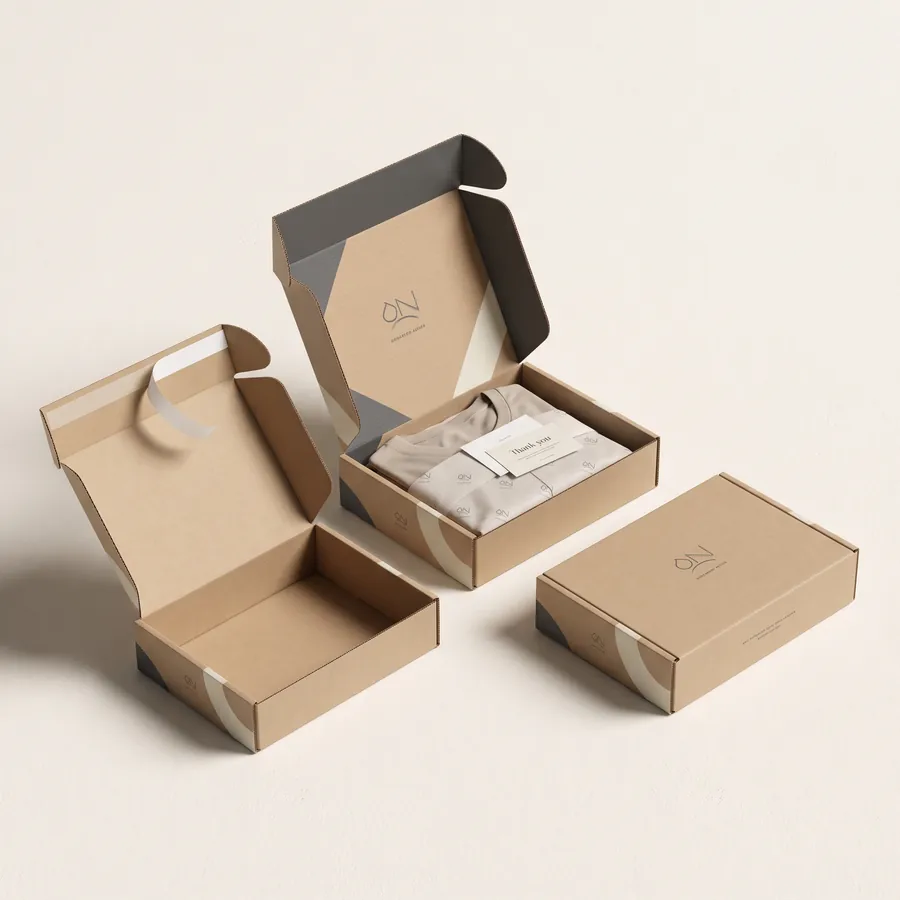
04Self-sealing mailer boxes
Peel-and-seal adhesive strip for fast packing.
 05
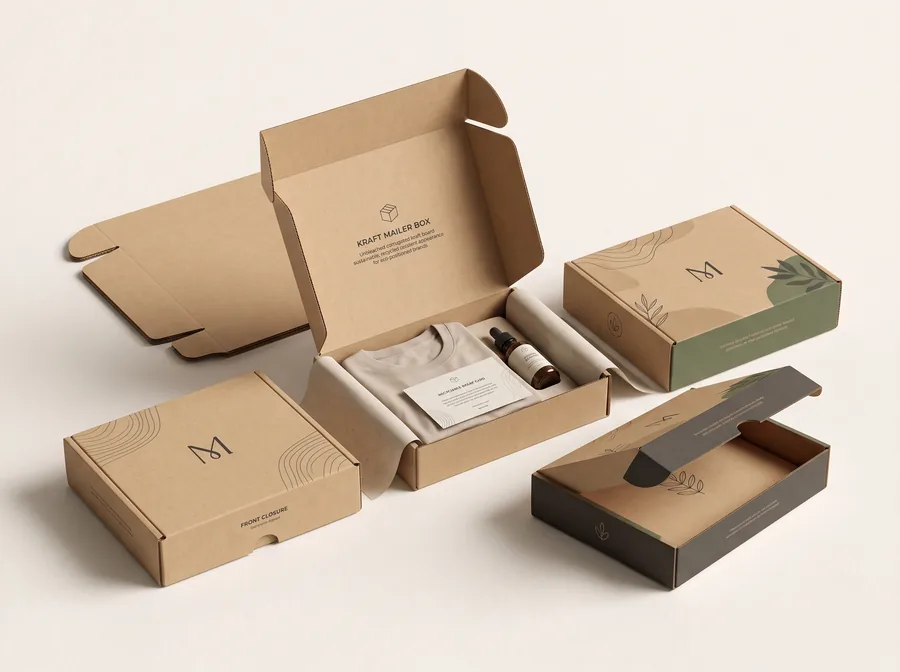
05Kraft mailer boxes
Unbleached kraft with recycled content for eco-positioned brands.
 06
06Die-cut window mailer boxes
Interior visibility panel for retail-style presentation.
 07
07Subscription mailer boxes
Repeat-order format built for consistent monthly unboxing.
 08
08Two-way mailer boxes
A second adhesive strip turns the outbound box into the return box.
 09
09Corrugated mailer boxes
E-flute or B-flute board for heavier or fragile products.
Materials, Printing & Finishes
Board choice for a mailer is a strength-versus-weight decision, E-flute suits light goods and prints more sharply, B-flute suits heavier or fragile items. Kraft is the third option, unbleached, recycled-content stock chosen more for its look and sustainability story than for structural strength.
Interior printing is worth calling out specifically: it costs modestly more than exterior-only, and it's the surface that appears in unboxing photos and videos. Finish choice tends to follow the closure — a taped or self-sealing mailer built for speed rarely needs foil or spot UV, while a mailer built to be part of the brand experience earns the extra finish cost back in how it photographs.
Why Brands Choose Shahwaze for Mailer Boxes
Closure recommended, not just offered
We ask how your product moves and packs before recommending RETF, ear lock, or self-sealing, not the other way round.
Sized to the packed product, not a stock chart
Dimensions built around your product's actual packed state, with clearance judged for fit rather than guessed.
Dielines stored for reorders
Your specification stays on file, so a reorder six months later matches the original.
Low minimums to wholesale
Test a design at low volume, often 100–500 units for a first run, then scale to wholesale pricing as orders grow.
Free samples before production
A physical sample you can pack, close, and test before committing to a full run.
Custom Mailer Boxes FAQs
Custom mailer boxes are one-piece corrugated or kraft boxes that fold from a flat sheet and close without tape, through an interlocking flap or lock. They ship flat, assemble quickly, and print inside and out for branding.
It depends on what matters most for your product. RETF suits most general shipping, ear lock adds security for rough transit handling, and a self-sealing strip is worth the small added cost anywhere packing speed matters. Tell us your product and fulfilment process and we'll recommend one rather than leave you to guess from a spec sheet.
Timeline depends on order size, closure complexity, and finish. We'll confirm an exact production and delivery estimate when you request a quote, and rush options are available for time-sensitive launches.
Enough for the product to slide in without force, not enough for it to shift once inside. Rigid products want a closer fit; compressible items like folded fabric tolerate more clearance.
No. The same one-piece, tape-free construction is used for apparel drops, cosmetic sets, subscription boxes, and corporate gifting — not just direct-to-consumer shipping.
Yes — mailer boxes with logo printing on interior and exterior surfaces. Interior print is what shows in unboxing photos and videos.
Yes — kraft mailer boxes in unbleached kraft with recycled content, alongside standard corrugated options.
A mailer with a peel-and-seal adhesive strip built into the flap, which speeds up warehouse packing. A second strip can be added to make the same box usable for returns.
Yes — subscription mailer boxes built for a consistent monthly unboxing, typically with interior print that stays constant across sends.
E-flute for lighter goods and sharper print detail, B-flute for heavier or fragile items that need more crush resistance. Full comparison is on our E-commerce Packaging page.
Yes — mailer boxes wholesale pricing at volume, with low minimums available for testing a new design first.
Yes — a physical sample you can pack, close, and test before committing to production.
Get a Mailer Box Built for Your Product
Stop choosing a closure blind. Tell us your product and how it packs, and we'll recommend the right custom mailer boxes build — free quote, no obligation.