
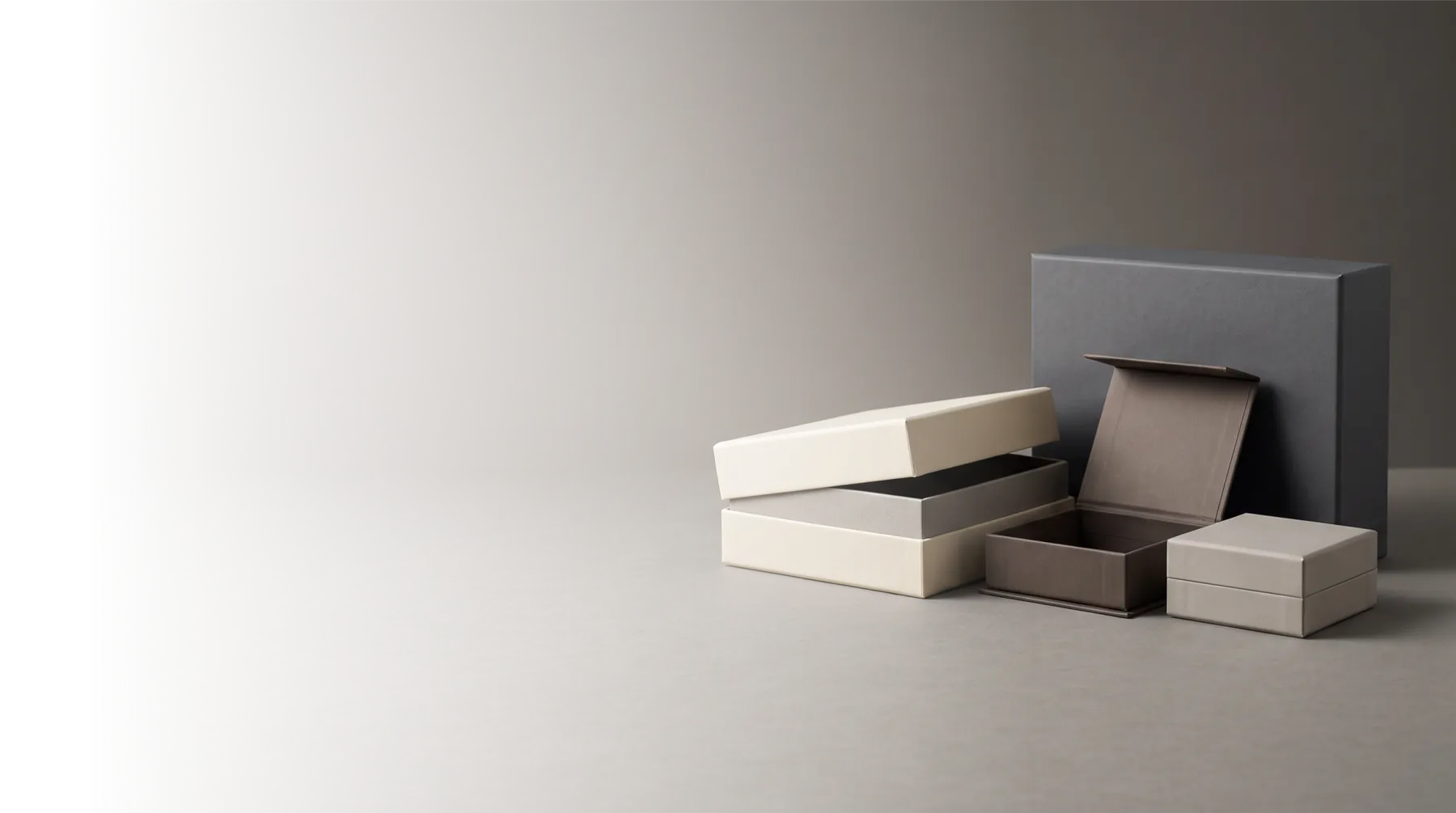
Custom Rigid Boxes for Luxury Packaging
Thick, wrapped board that feels premium in the hand before the lid even comes off.

What Actually Makes a Box "Rigid"?
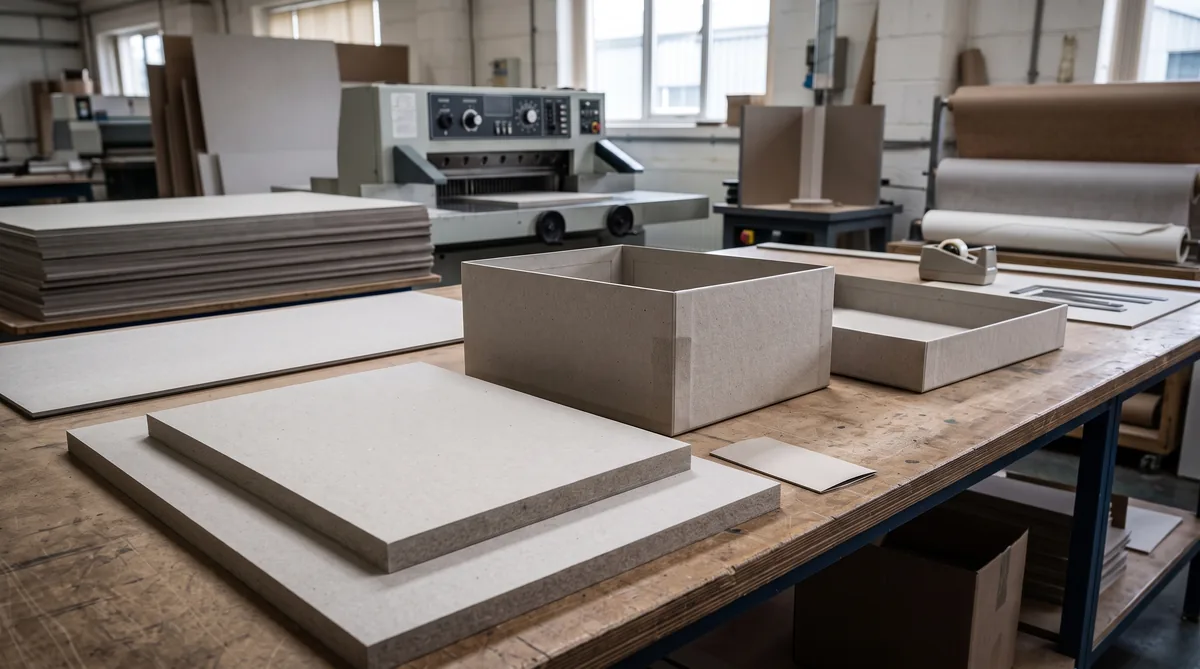
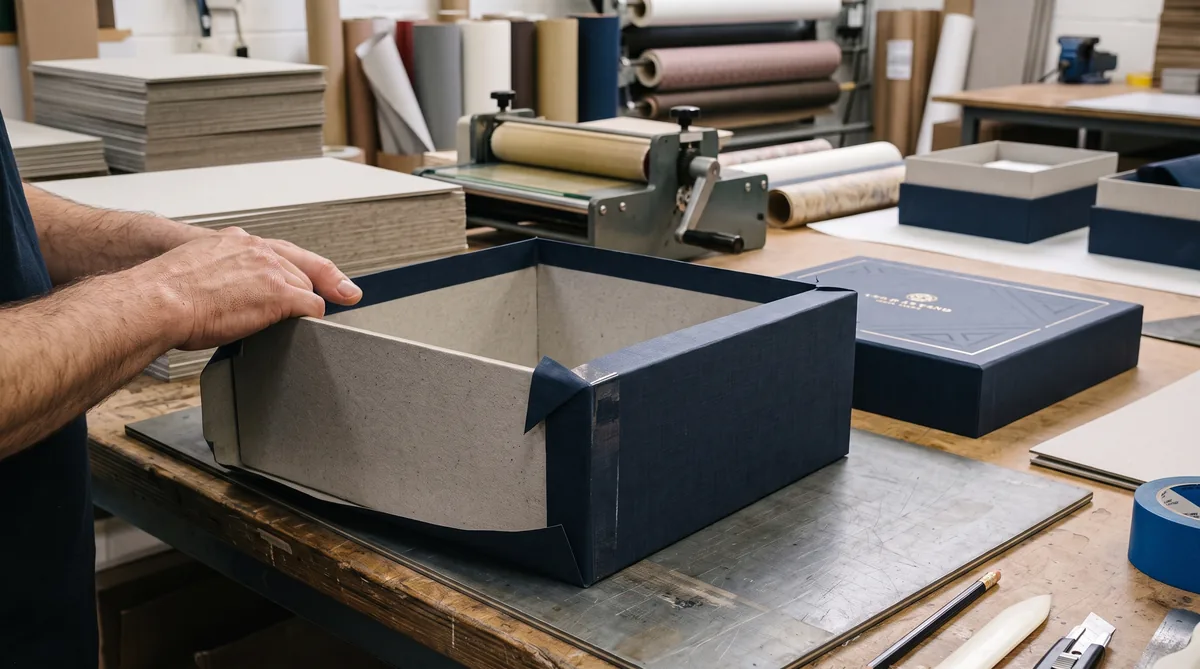
Custom rigid boxes are built from thick, dense board, often called greyboard or chipboard, that's wrapped in printed paper rather than printed directly. That wrap-and-fold construction is what gives a rigid box its weight and its inability to collapse flat, and it's the real difference from a folding carton, which is thin board printed and creased in one piece.
At Shahwaze, we don't just quote "rigid" as a single product, we specify the board thickness, the wrap method, and the closure to match how premium the box actually needs to feel, since those three choices separate a box that feels expensive from one that just costs more.
Shahwaze Packaging manufactures custom rigid boxes for cosmetic, gift, apparel, and retail brands across the USA. See our Cosmetic Packaging, Gift Packaging, and Apparel Packaging pages for industry-specific detail.
How a Rigid Box Is Actually Built
A folding carton is a thin board, printed directly, then scored and folded into shape, that's why it ships flat. A rigid box works differently.
The Ship-Flat Trade-Off: Why Rigid Boxes Arrive Pre-Assembled
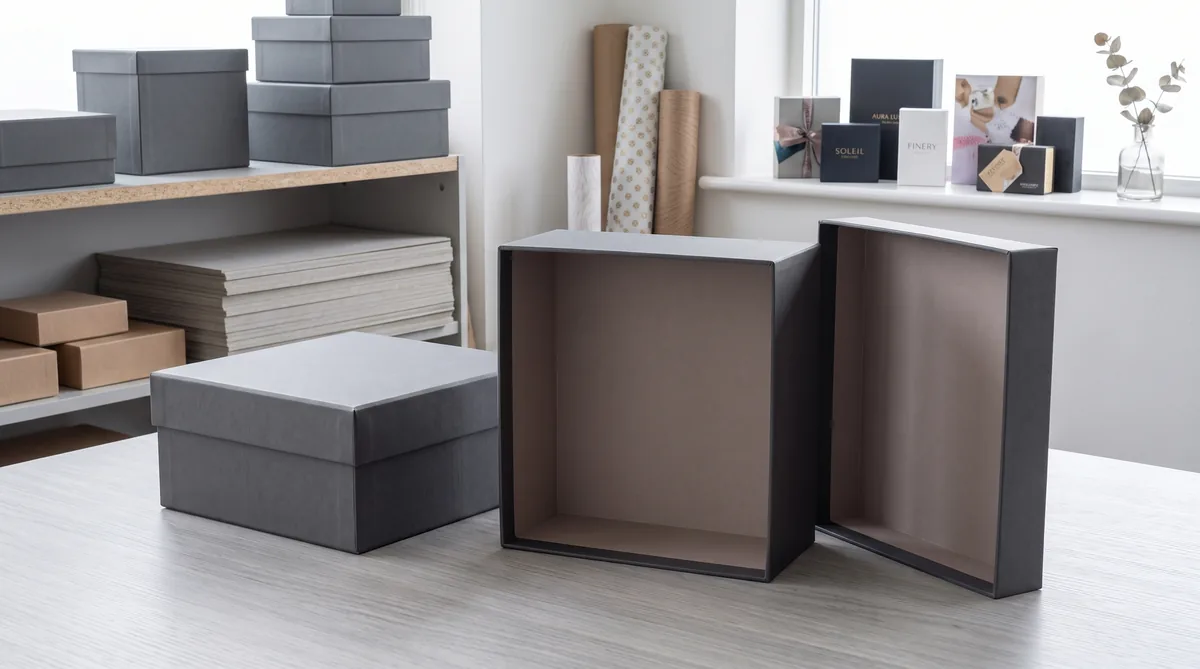
Folding cartons ship flat and get assembled at the point of packing. Rigid boxes generally don't, the wrapped construction that gives them their shape also means most arrive pre-assembled.
That has a real, practical consequence: pre-assembled boxes take up more space in a shipment and in your warehouse than the same number of flat-packed cartons. It's a trade worth knowing about before you order, not after the freight bill arrives, and it's one reason rigid is usually reserved for lower-volume, higher-value products rather than high-volume shipping.
If your product needs to ship in high volume, our Corrugated Boxes material page may be the better fit, flat-packed and built for freight efficiency rather than shelf presentation.
Which Rigid Box Structure Fits Your Product?
These are often treated as separate products with no real guidance attached. The decision actually comes down to how the box opens and whether it needs to ship flat despite being rigid.
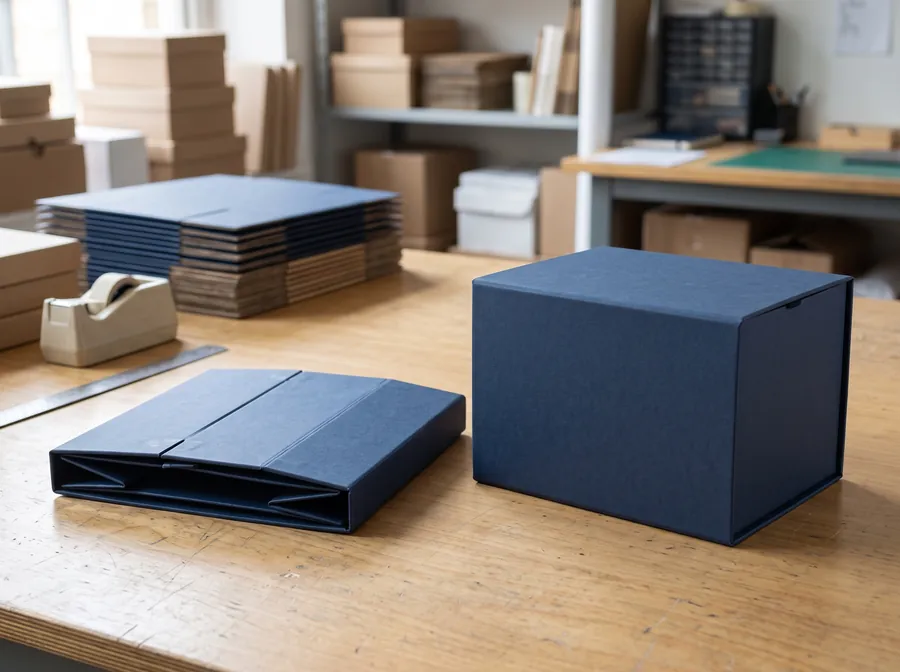
Collapsible rigid boxes are worth a second look if the shipping trade-off above concerns you, they're the one rigid structure built specifically to solve it. For a similar slide-open mechanism in lighter boards, see our Sleeve Boxes style page.
What Goes in a Rigid Box?
Three industries account for most rigid box use, and each tends to pair with a specific structure from the table above.

Jewelry and watches
The single biggest use case. Hinged lid boxes suit necklaces and rings, the fixed hinge keeps the piece secure and gives a deliberate, ritualistic opening. Drawer boxes suit bracelets and earrings, where the slow pull-out reveals matters. Two-piece boxes are the cost-effective choice for higher-volume retail jewelry.

Electronics
Phones, headphones, and small gadgets use rigid construction to signal precision before the box even opens. This is also where foam inserts matter most, enough depth for cables, chargers, and manuals to sit in fitted cavities rather than loose.

Cosmetics and skincare
Magnetic closure and two-piece structures both work well here, the beauty industry sells on presentation as much as product, and rigid board holds finishes (foil, soft-touch) that make that presentation possible. See our Cosmetic Packaging page for related structures.

Apparel and gifting
Premium apparel, gift sets, and subscription/PR boxes round out the common use cases, usually two-piece or magnetic closure, prioritising unboxing over sheer protection.
Rigid Box Types & Structures We Build
 01
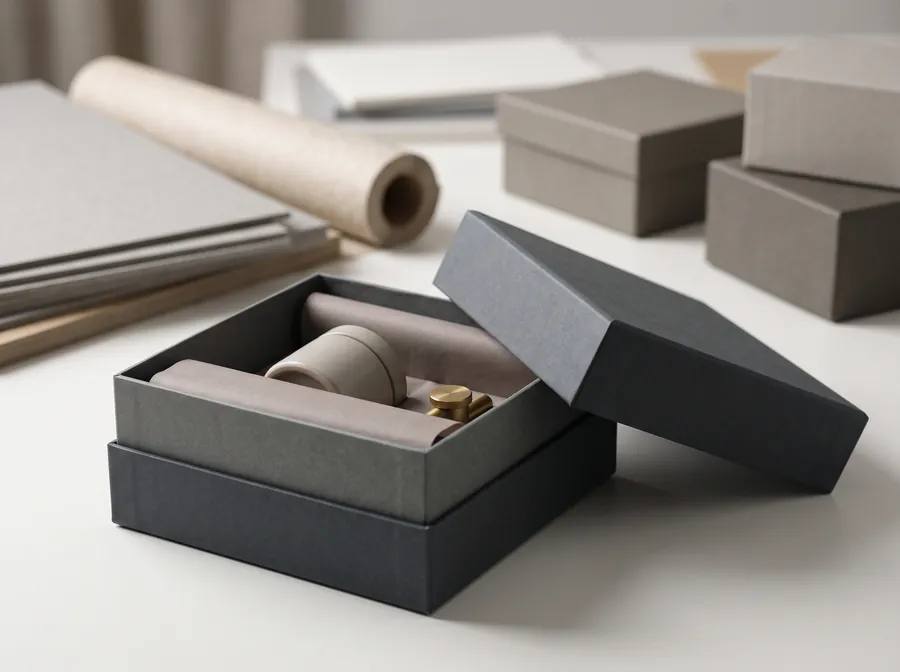
01Two-piece rigid boxes
Classic separate base-and-lid construction for premium presentation.
 02
02Magnetic closure boxes
Hinged or fitted lid held shut with embedded magnets.
 03
03Collapsible rigid boxes
Ships flat, locks into rigid shape at final assembly.
 04
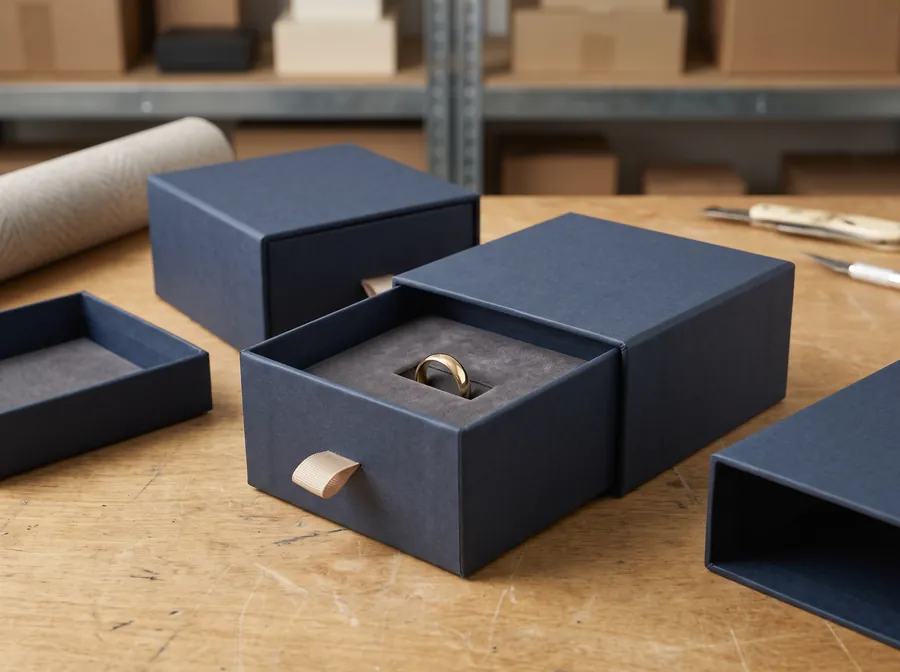
04Rigid drawer boxes
Slide-out inner tray from an outer sleeve, for small precious items.
 05
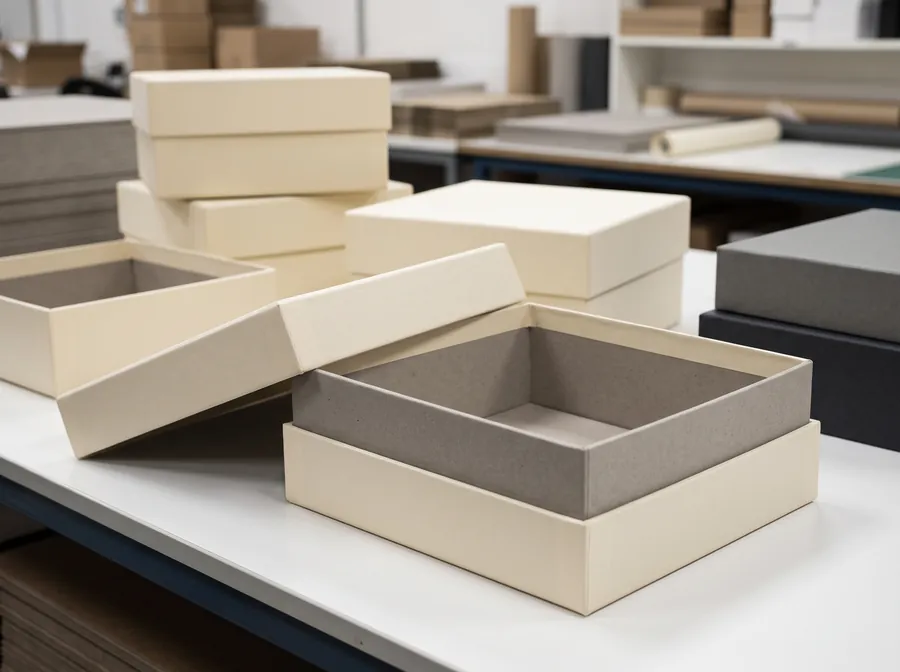
05Rigid setup boxes
Pre-assembled, wrapped rigid construction for maximum structural strength.
Board, Wrap & Finish Specifications for Custom Rigid Boxes
Board thickness scales with how much protection and presence the product needs, heavier board for jewelry and premium electronics, lighter (but still rigid) board for gift sets that prioritise finish over sheer weight.
Wrap paper ranges from simple matte or gloss stock through to specialty textured papers. Finishes layer on top: foil stamping, soft-touch lamination, spot UV, and embossing or debossing, all of which hold better on wrapped board than on a thin folding carton. For eco-facing rigid options, see our Kraft Boxes material page.
Why Brands Choose Shahwaze for Rigid Boxes
Structure matched to the unboxing moment
Two-piece, magnetic, collapsible, or drawer, recommended based on how the product should be revealed, not a default.
Ship-flat trade-off explained up front
We'll tell you if collapsible construction solves a real freight problem for your volume, before you commit to standard rigid.
Finish expertise
Foil, soft-touch, and embossing specified for wrapped board, not adapted from folding-carton techniques that don't hold up as well.
Low minimums to wholesale
Test a design at low volume, often 100–500 units for a first run, then scale to wholesale pricing.
Frequently Asked Questions
Custom rigid boxes are built from thick, dense board wrapped in printed paper, rather than printed directly like a folding carton. That construction gives them weight, structure, and a premium feel.
A folding carton is a thin board printed directly and folded flat for shipping. A rigid box uses thick board wrapped in separately printed paper, arrives pre-assembled, and can't fold flat, trading shipping efficiency for a heavier, more premium result.
Two reasons: the board itself is thicker and more expensive, and the wrap-and-glue construction takes more labour than printing and folding a single sheet. The pre-assembled shipping also adds freight cost per unit compared to a flat-packed carton.
Two-piece suits classic luxury presentation. Magnetic closure adds a reveal moment for cosmetics and gift sets. Collapsible is worth choosing if shipping cost or warehouse space is a real concern, since it folds flat until final assembly.
Generally no, standard rigid boxes arrive pre-assembled. Collapsible rigid boxes are the exception, built specifically to fold flat and lock into shape later.
Yes, luxury packaging boxes are one of the most common uses for rigid construction, since the weight and wrap finish both signal premium value.
Yes, rigid gift boxes with two-piece, magnetic, or drawer construction, suited to gifting and event presentation.
Foil stamping, soft-touch lamination, spot UV, and embossing all hold up better on wrapped rigid board than on a thin folding carton, which is why premium finishes are usually paired with rigid construction.
A structure where an inner tray slides out from an outer sleeve, similar in feel to a sleeve-and-tray format but built from heavier rigid board, suited to small, precious items like jewelry.
Yes, rigid boxes wholesale pricing at volume, with low minimums (often 100–500 units) for a first production run.
Standard rigid boxes are pre-assembled, not flat, so they take up more physical space per unit than a folding carton. If that's a problem, collapsible rigid construction folds flat until final assembly and is worth discussing before your next order.
Yes, rigid construction is available with recycled board cores and FSC-certified wrap papers. See our Kraft Boxes page for eco-facing material options.
Yes, a physical sample so you can check board weight, wrap quality, and closure before committing to production.
Get a Rigid Box Built for Your Product
Give your product the weight and presence it deserves. Get a free quote on custom rigid boxes built for your brand.