

Custom Burger Boxes: Built for Steam, Grease, and Speed
Clamshell, tuck-top, or corrugated, matched to how fast your line moves and how far your delivery runs.
Clamshell, Tuck-Top, or Corrugated?
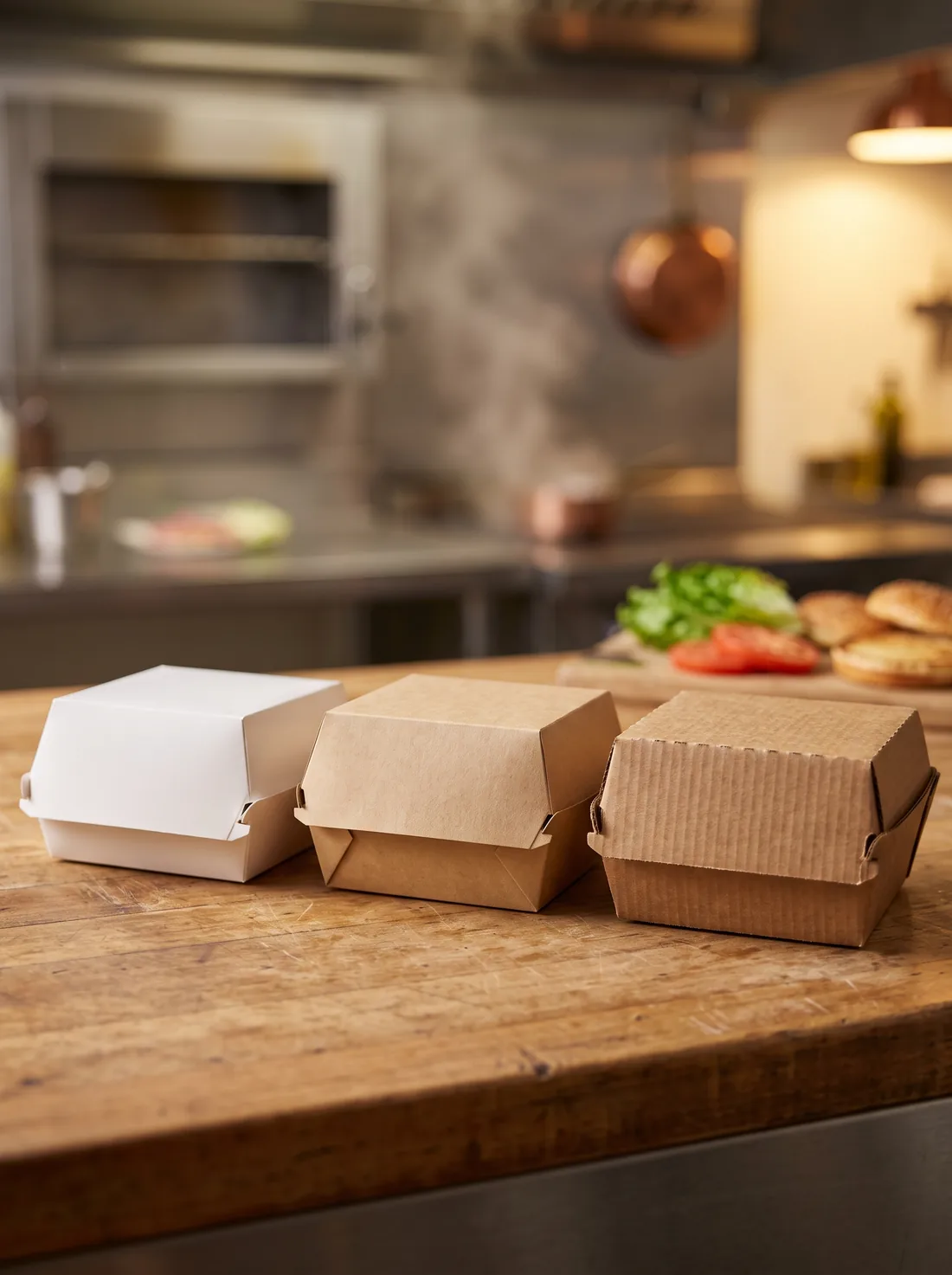
Custom burger boxes come in three main structures, and the right one depends on your kitchen more than your menu. A clamshell burger box is the fastest to close during a rush. A tuck-top carton gives more surface for branding and holds its shape well when stacked. A corrugated build adds insulation and crush resistance for longer delivery runs.
At Shahwaze, we don't just default to clamshell because it's familiar. We ask how your kitchen packs and how far the order travels before recommending a structure.
Shahwaze Packaging manufactures custom burger boxes for restaurants, food trucks, ghost kitchens, and delivery brands across the USA. See our Food Packaging page for our full range of food-service packaging, and our Custom Pizza Boxes page if your kitchen runs a wider menu out of the same line.
Choosing Your Structure
Every supplier lists these three structures. Almost none compare them against how a kitchen actually operates.
The tuck-top option is the same structure explained in full on our Tuck-End Boxes style page, and corrugated is covered in depth on our Corrugated Boxes material page.
Foam, Fiber, or Paper: What a Clamshell Is Actually Made From
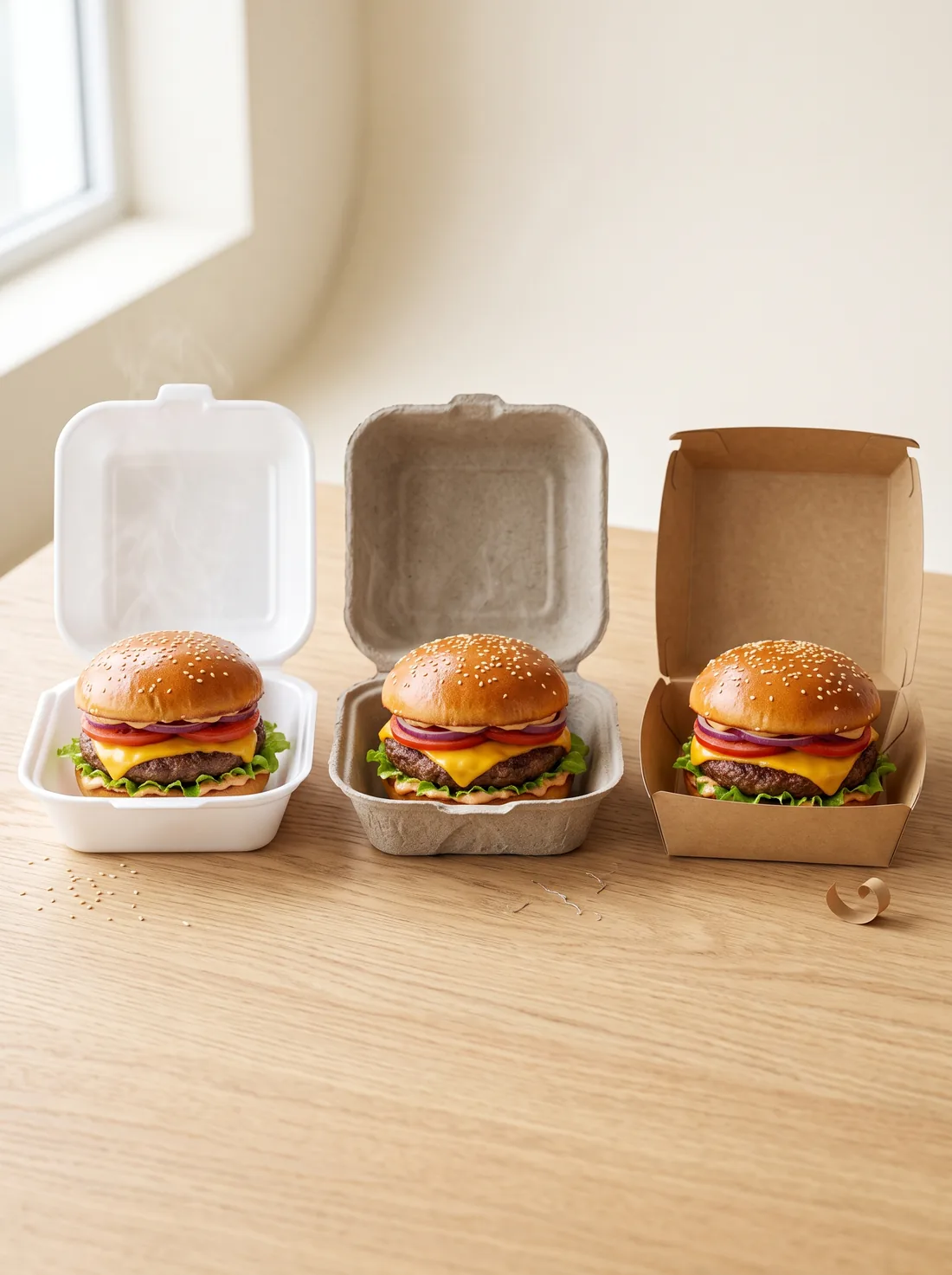
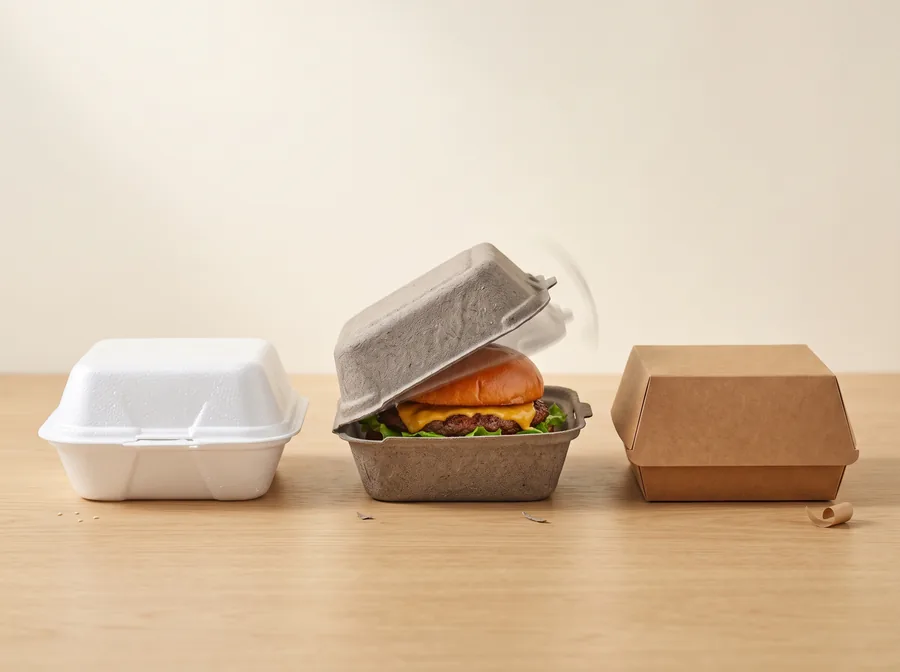
Clamshell burger boxes come in three material families, and each has a real trade-off. EPS foam holds heat the longest and resists grease well, but a growing number of US municipalities restrict or ban foam food packaging, worth checking your local rules before committing to it.
- Molded fiber. Made from recycled paper pulp, naturally grease resistant, and commercially compostable in many facilities, a strong middle ground on both performance and sustainability.
- Paperboard or kraft. Lighter weight and the most printable surface of the three, though it holds heat for a shorter window than foam or molded fiber.
If your delivery radius is short and presentation matters most, paperboard or kraft usually wins. If food needs to stay hot for a longer stretch, molded fiber is the sustainability-minded choice, with foam as the highest-performance option where local rules allow it.
Tell us your delivery radius and any local packaging restrictions, we'll recommend a material and quote it free.
Keeping the Bun From Going Soggy
A hot burger releases steam the same way a pizza does, covered in more detail on our Custom Pizza Boxes page. Trapped inside a sealed box, that steam condenses on the lid and drips straight back onto the top bun, and the crisp edge you built into the recipe is gone by the time the box is opened.
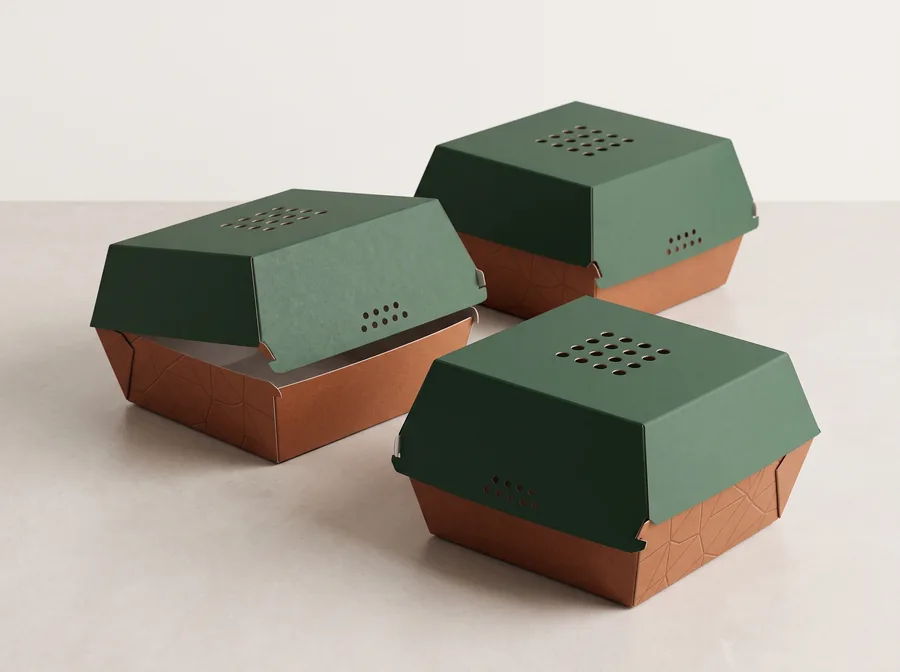
Vented burger boxes let that steam escape instead. Vent placement matters more than vent count: holes positioned away from direct contact with the bun do the job without letting too much heat out too fast.
Grease Resistance and Sizing Your Menu
Grease resistant burger boxes use a coating or liner that stops oil and sauce from soaking through the board. Skip it and the box weakens in transit and looks unappetizing before it's even opened.
Standard sizing runs roughly 4 inches square for sliders and regular burgers, up to 5 or 6 inches square with extra depth for double-patty and loaded gourmet stacks. Tell us your build height (how tall your burger sits fully stacked) and we'll confirm the right internal clearance rather than you guessing from a generic size chart.
Burger Box Options We Manufacture
 01
01Clamshell burger boxes
One-motion hinged close, foam, molded fiber, or paperboard.
 02
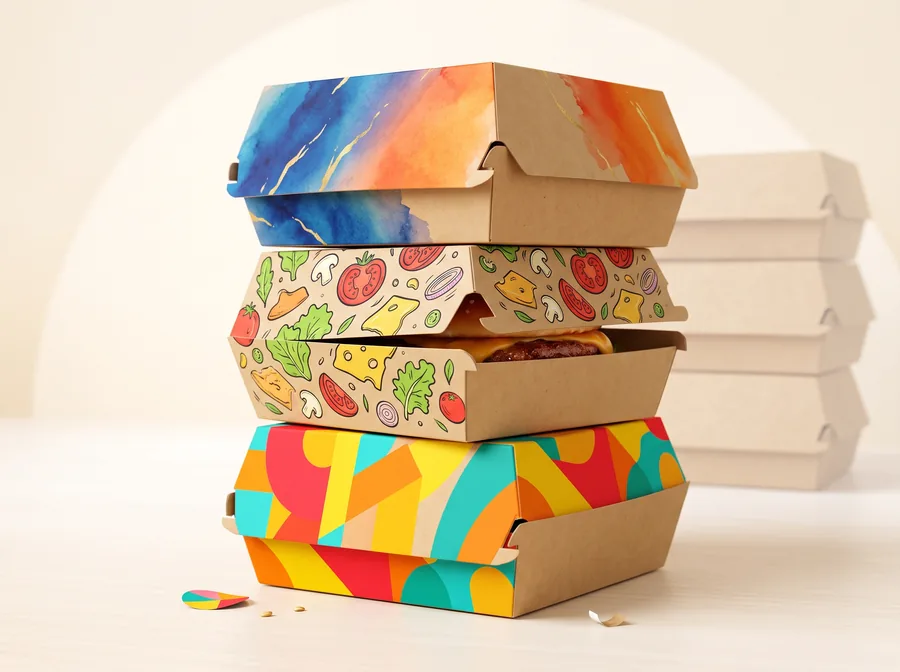
02Tuck-top burger cartons
Maximum print area, stacks cleanly on the expo line.
 03
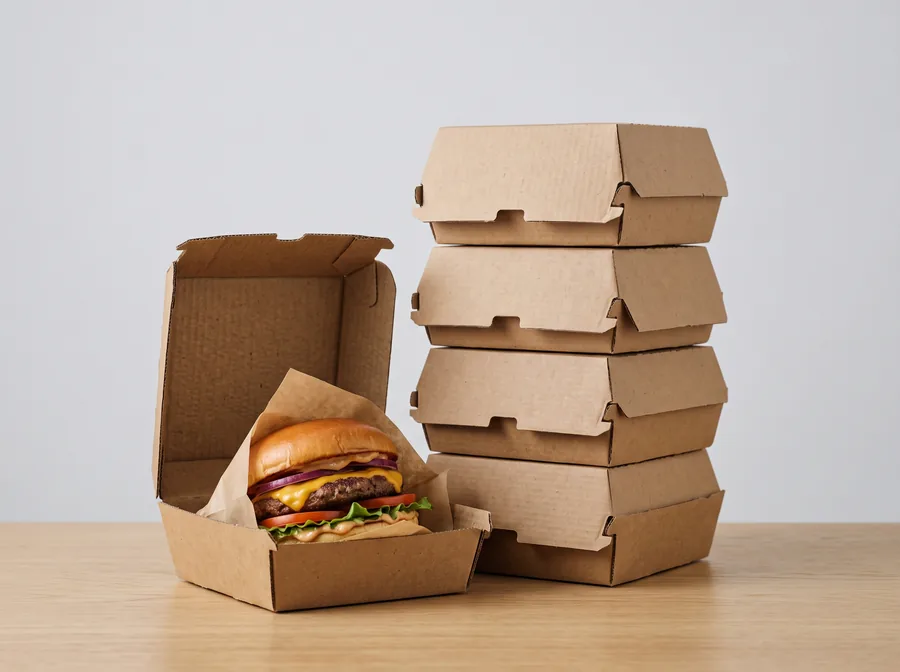
03Corrugated burger boxes
Extra insulation and crush resistance for longer delivery.
 04
04Vented burger boxes
Steam vents positioned to prevent bun sogginess without losing heat too fast.
 05
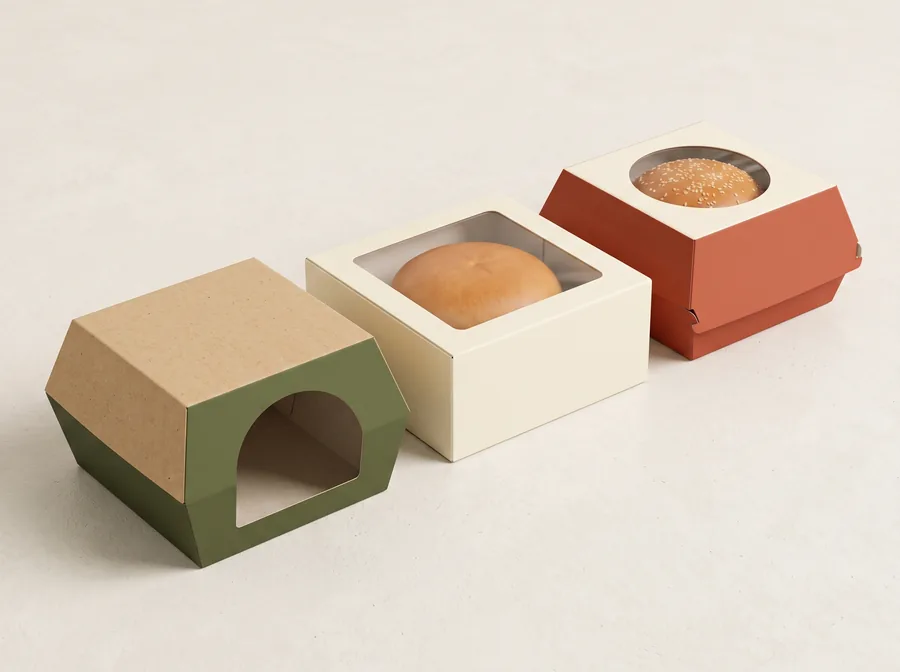
05Window burger boxes
Die-cut or film window for counter and display presentation.
Why Restaurants Choose Shahwaze for Burger Boxes
Structure matched to your line, not a default
Clamshell, tuck-top, or corrugated, recommended based on speed, print needs, and delivery distance.
Material trade-offs explained honestly
Including the foam-restriction question most suppliers skip past.
Low minimums for wholesale
Test a design at low volume, often 100 to 500 units for a first run, then scale to wholesale pricing.
Free samples before production
A physical sample so you can test grease resistance and venting with an actual burger before committing.
Frequently Asked Questions
Clamshell closes fastest for high-volume service. Tuck-top gives the most print area and stacks well. Corrugated adds insulation and crush resistance for longer delivery runs.
Clamshell burger boxes come in EPS foam (best heat retention, but restricted in some municipalities), molded fiber (compostable, naturally grease resistant), or paperboard and kraft (lightest, most printable).
In a growing number of US municipalities, yes. Rules vary by city and state, so check local regulations before committing to foam packaging.
Yes, compostable burger boxes in molded fiber, commercially compostable in many facilities.
A hot burger releases steam. Without vents, that steam condenses on the lid and drips back onto the bun, making it soggy instead of holding its texture.
Yes, grease resistant burger boxes with a coating or liner that stops oil and sauce from soaking through the board.
Standard sizing runs about 4 inches square for regular burgers and sliders, up to 5 or 6 inches square with extra depth for double-patty and loaded builds. Tell us your build height and we'll confirm clearance.
Yes, die-cut or film window options for counter and display presentation.
Yes, burger boxes with logo printing in full colour, across clamshell, tuck-top, or corrugated structures.
Yes, burger boxes wholesale pricing at volume, with low minimums (often 100 to 500 units) for a first production run.
Yes, see our Custom Pizza Boxes page if your kitchen also runs pizza, and our Food Packaging page for our full food-service range.
A clamshell closes in one motion and opens like a hinge. A tuck-top carton, the same structure explained on our Tuck-End Boxes page, gives more print surface and stacks more predictably, at the cost of a slightly slower close.
Yes, a physical sample so you can test grease resistance, venting, and structure with an actual burger before committing to production.
Get Burger Boxes Built for Your Line
A box that keeps the bun crisp and the grease contained is part of the order. Get a free quote on custom burger boxes built for how you serve.